
How to Choose the Right Promotional Products Suppliers for Your Business in Australia
Discover how to find and evaluate reliable promotional products suppliers in Australia — covering quality, pricing, lead times, and more.

Written by
Ned Murray
Buying Guides & Tips
Choosing the right promotional products suppliers can make or break your next branded merchandise campaign. Whether you’re a Sydney-based corporate team preparing for a major conference, a Gold Coast events company pulling together merchandise for a festival, or a Melbourne retail brand launching a new product line, the supplier you choose will directly influence the quality of your finished products, your turnaround time, and ultimately, your brand’s reputation. With dozens of options available across Australia, knowing exactly what to look for — and what to avoid — is essential before you commit your budget.
What Do Promotional Products Suppliers Actually Do?
Before diving into how to choose the right one, it’s worth understanding what promotional products suppliers genuinely offer. At their core, these businesses source, customise, and supply branded merchandise to organisations across every sector — from government departments and universities to sporting clubs and event organisers. Their services typically span the entire production process: from artwork file preparation and decoration method selection, through to sampling, production, quality checking, and delivery.
Some suppliers operate as pure wholesalers, meaning they work exclusively with resellers or marketing agencies. Others sell directly to end clients, offering a more hands-on consultation experience. Many sit somewhere in between — they’ll work with businesses of any size but may have minimum order quantities (MOQs) that reflect their production capabilities.
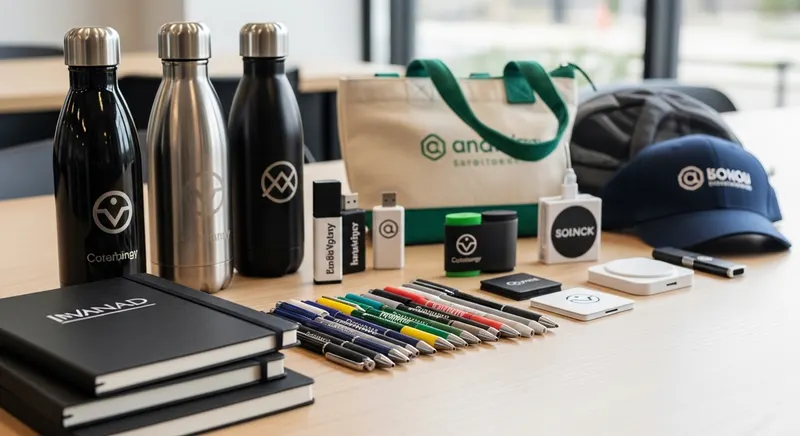
The range of products these suppliers carry is vast. Think custom branded water bottles, personalised travel mugs, men’s work polo shirts, branded tote bags, and unique corporate gifts — right through to eco-friendly and sustainable promotional products for organisations with environmental commitments.
Understanding what a supplier specialises in, and whether that aligns with your needs, is the first step in making a smart decision.
Key Criteria for Evaluating Promotional Products Suppliers
Product Range and Specialisation
Not every supplier is built for every brief. Some excel at custom apparel — sports t-shirts, premium tee brands, hi-vis workwear — while others focus on drinkware, tech accessories, or event merchandise. Before approaching a supplier, be clear about what you need.
If your campaign centres on eco-conscious gifting, look for suppliers who carry genuine sustainable branded merchandise, including options made from recycled, bamboo, or organic materials — not just products marketed with green language but without the certifications to back it up.
A well-rounded supplier should be able to demonstrate a diverse catalogue while still having genuine depth in the categories most relevant to your brief.
Decoration Methods and Print Quality
The decoration method used on your merchandise will affect both the look and durability of your branding. Common methods include screen printing, embroidery, sublimation, pad printing, laser engraving, and UV printing. Each has its strengths depending on the product type, material, and design complexity.
Ask potential suppliers:
- What decoration methods do they offer in-house versus outsource?
- Can they handle full-colour designs, or are they limited to single-colour prints?
- Do they use PMS colour matching to ensure brand consistency?
- What is the resolution and print quality like on small or detailed logos?
A good supplier will be transparent about these capabilities and proactively advise you on the best decoration method for your specific product and artwork.
Minimum Order Quantities and Pricing Tiers
MOQs vary enormously between suppliers. Some will accept orders of as few as 25 units, while others require 500 or more before they’ll even set up a job. Understanding MOQs upfront is critical, particularly for smaller organisations, community groups, or businesses testing a new merchandise concept.
Equally important is understanding how bulk pricing tiers work. Most suppliers offer meaningful price breaks at higher quantities — for example, custom branded mugs or reusable water bottles might cost significantly less per unit when ordered at 250 versus 50. If your campaign has room to scale, factor this into your budget conversations early.
Always ask for an itemised quote that clearly separates:
- Unit cost at your required quantity
- Setup or origination fees (these are often one-off costs per colour or per design)
- Delivery charges to your location — whether that’s Brisbane, Adelaide, or Darwin
Lead Times and Turnaround
One of the most common pain points in ordering branded merchandise is misjudging lead times. Standard production for most promotional products suppliers in Australia runs anywhere from 5 to 15 business days, with express options sometimes available at a premium. If your products need to be imported from overseas (which many are), add 2–6 weeks to that timeline depending on freight conditions.
For time-sensitive campaigns — a product launch, a trade show, or a school sports day — always confirm the in-hands date before you sign off on a purchase order. Suppliers who are upfront about realistic timelines (rather than just telling you what you want to hear) are worth their weight in gold.
Sampling and Proof Approval
A reputable supplier will offer pre-production samples or digital proofs before committing to a full production run. This step is non-negotiable for large orders or complex decoration jobs. Always approve a physical sample when ordering embroidered items like gym towels or hooded towels, where stitch density and thread colour selection can vary significantly from what you see on screen.
For print-based products — vinyl stickers, bags, bottles — a digital proof showing your artwork at scale is typically sufficient, but request a physical sample if budget and timing allow.
Red Flags to Watch Out For
Not every supplier delivers on their promises. Here are some warning signs that should give you pause:
- No artwork guidelines provided. Professional suppliers will send clear specifications for file formats, resolution, and colour modes.
- Vague or non-committal quotes. If a supplier can’t give you a firm price with setup fees and freight clearly itemised, keep looking.
- No sample process. Any supplier unwilling to provide proofs or samples before full production is a risk.
- Poor communication. If responses are slow or unclear during the quoting stage, it often reflects how they’ll handle production queries and issues.
- No verifiable examples of past work. Ask to see case studies, client references, or production samples — especially for large or high-value orders.
Niche and Local Considerations
Geography can matter more than people realise. A supplier with strong logistics in Victoria may not offer the same efficiency shipping to Perth or regional Queensland. If your organisation is based outside a capital city — say, in Wollongong or the Illawarra region — it’s worth exploring whether a supplier has local or regional expertise that could work in your favour for faster turnaround and lower freight costs.
Local suppliers also tend to be more responsive to site visits, factory inspections, or face-to-face briefings — an underrated advantage when you’re managing a large, complex merchandise order.
What a Great Supplier Relationship Looks Like
The best promotional products suppliers don’t just process your order — they act as an extension of your marketing or events team. They’ll proactively suggest alternatives if your first-choice product has a long lead time, advise on decoration methods that will handle your logo better, and flag potential issues before they become costly mistakes.
Over time, a strong supplier relationship means your account history is on file, your artwork is stored, your preferred products are known, and reorders become seamless. This matters particularly for organisations with repeat merchandise needs — personalised toiletry bags for a hotel chain’s gift programme, for example, or wine bag coolers for an annual corporate event, or even branded wine gifts for end-of-year client appreciation.
When you find a supplier who communicates clearly, delivers consistently, and takes quality seriously, invest in that relationship. It pays dividends across every campaign.
Conclusion: Key Takeaways for Choosing Promotional Products Suppliers in Australia
Navigating the landscape of promotional products suppliers doesn’t have to be overwhelming. Keep these essentials front of mind:
- Clarify your needs before you shop. Know your product categories, quantities, timeline, and budget before approaching any supplier.
- Ask the right questions. Probe decoration capabilities, MOQs, setup fees, lead times, and their proof and sample process.
- Watch for red flags. Vague pricing, no samples, and poor communication are early warning signs of a difficult production experience.
- Consider local and regional fit. A supplier with strong logistics in your state or region can offer real advantages in speed and service.
- Build long-term relationships. The best supplier partnerships grow stronger over time — consistent quality, stored artwork, and smoother reorders are worth investing in.
Whether you’re ordering 50 branded tote bags for a networking event or 2,000 custom bottles for a national campaign, the right promotional products supplier will help you get there with confidence.