
What to Look for When Choosing a Promo Brands Partner for Your Business
Discover what makes a great promo brands partner for Australian businesses — from product range to decoration methods, MOQs, and turnaround times.

Written by
Dane Santos
Branding & Customisation
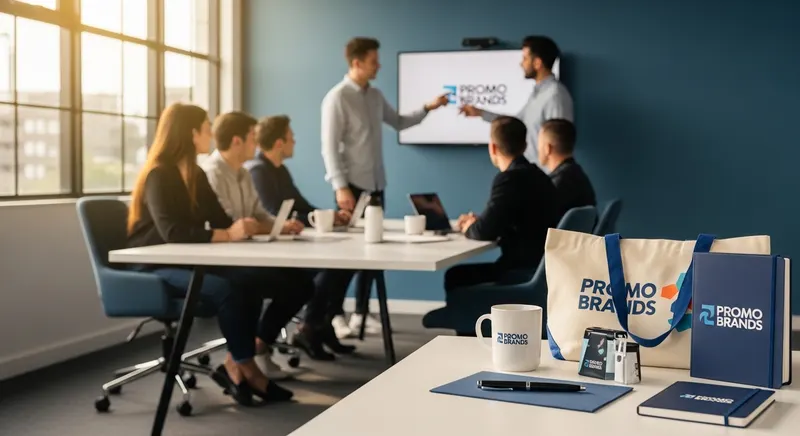
Choosing the right promotional merchandise partner for your business is one of those decisions that seems straightforward on the surface — until you’re knee-deep in artwork files, chasing delivery deadlines, and trying to decipher the difference between pad printing and sublimation. Whether you’re a Sydney-based corporate team planning a product launch, an event organiser in Brisbane sourcing conference bags, or a Melbourne business looking to refresh your branded merchandise for 2026, working with the right promo brands partner can be the difference between merchandise that genuinely builds brand awareness and branded items that end up collecting dust in a storeroom. This guide breaks down everything you need to know before you commit to a branded merchandise supplier — from what questions to ask upfront to how to evaluate quality, range, and value for money.
What Does a Promo Brands Partner Actually Do?
It’s worth taking a moment to define what we mean when we talk about a promotional merchandise partner. At its core, a promo brands supplier sources, customises, and delivers branded products on behalf of businesses and organisations. That might sound simple, but the scope of what a quality supplier does is actually quite broad.
A good merchandise partner doesn’t just slap a logo on a pen and ship it to you. They act as an extension of your marketing team — advising you on product selection, helping you choose the right decoration method for your brand aesthetic, managing artwork proofing, coordinating production timelines, and ensuring the finished products represent your brand professionally and consistently.
For corporate teams especially, having a reliable supplier who understands branding nuances — like PMS colour matching, embroidery thread counts, and how different materials interact with various print methods — is genuinely valuable. It saves time, prevents costly mistakes, and ensures your merchandise investment actually delivers results.
The range of products a quality partner should cover includes everything from custom branded tote bags and personalised travel mugs through to work polo shirts for men, custom water bottles, and unique corporate gifts for Australian businesses.
Key Factors to Evaluate When Comparing Promo Brands Suppliers
Not all promotional merchandise suppliers are created equal. Here’s what to look for when you’re assessing your options.
Product Range and Depth
A supplier worth working with should offer a genuinely broad product catalogue — not just the basics. Yes, branded pens and notebooks are staples, but a strong promo brands partner should also be able to source more interesting categories like personalised toiletry bags, wine bag coolers, UV-printed custom merchandise, and personalised mugs in wholesale quantities.
The depth of the range matters too. Can they supply eco-friendly and sustainable promotional products alongside conventional branded items? Can they handle a complete uniform order including hi-vis workwear as well as a collection of premium corporate gifts? Versatility is a sign that a supplier has strong manufacturing and sourcing networks, which ultimately benefits you.
Decoration Methods Available
How your logo and branding are applied to a product has a huge impact on the final result. A capable supplier should offer multiple decoration methods and advise you on which is most appropriate for each product type. The most common methods include:
- Screen printing — ideal for flat surfaces like t-shirts, tote bags, and caps; great for bold, single-colour or multi-colour designs
- Embroidery — the premium choice for apparel like polo shirts, caps, and jackets; durable and professional-looking
- Sublimation — produces full-colour, photographic-quality prints on polyester garments and hard goods
- Laser engraving — perfect for metal, timber, and glass products; creates an elegant, permanent mark
- Pad printing — suited to smaller promotional items like pens, USB drives, and keyrings
- Digital printing — versatile method for short runs and complex artwork
If a supplier can only offer one or two of these methods, it significantly limits what they can deliver for you. Ask directly what methods they have in-house versus what they outsource, as that can affect turnaround times and quality control.
Minimum Order Quantities (MOQs)
MOQs vary considerably across product categories and suppliers. For a small business ordering branded merchandise for the first time, high MOQs can be a real barrier. Typical MOQs in the Australian market look something like this:
- Branded pens: 100–250 units
- Custom t-shirts: 12–24 units
- Embroidered polo shirts: 6–12 units
- Branded water bottles: 25–50 units
- Custom tote bags: 50–100 units
A supplier who is flexible with MOQs — or who can offer sample orders before you commit to a full run — demonstrates confidence in their product quality and a genuine interest in building a long-term client relationship rather than just maximising order value.
Turnaround Times and Reliability
This is where many businesses come unstuck. You’ve confirmed a product launch date or an event date, the promotional merchandise was ordered with what seemed like plenty of lead time, and then something goes wrong with production or shipping. It’s a stressful scenario that’s entirely avoidable with the right supplier.
Ask prospective partners about their standard turnaround times, what rush order options are available (and at what additional cost), and how they communicate with you if there are delays. For Australian businesses, it’s worth asking whether products are warehoused locally or shipped from overseas, as international production timelines can add two to four weeks to your order.
For reference, a standard decorated apparel order typically takes seven to fourteen business days, while more complex items or large quantities can take three to four weeks. If you’re organising a conference in Adelaide or a trade show on the Gold Coast, always build in extra buffer time.
Evaluating Product Quality
There’s no substitute for physically seeing and touching a product before you commit to a large order. Any reputable promo brands partner should offer the option to request samples — either existing stock samples to assess product quality, or pre-production samples with your artwork applied before full production begins.
When assessing product quality, pay attention to:
- Material weight and construction — a branded hoodie or personalised travelling mug that feels flimsy will reflect poorly on your brand
- Print quality — look for sharp edges, consistent colour saturation, and no bleeding or cracking
- Embroidery finish — threads should be tight, clean, and correctly tensioned
- Colour accuracy — does the printed colour match your brand’s PMS specification?
For apparel specifically, checking garment wash-fastness is worth doing. A screen-printed t-shirt for a sports team needs to survive regular washing without fading — that’s a basic quality expectation that lower-cost suppliers don’t always meet.
Sustainable and Ethical Merchandise Options
This is increasingly important for Australian businesses, particularly those operating in the government, education, and corporate sectors. A growing number of organisations now require their merchandise to meet sustainability criteria — recycled materials, organic certified fabrics, reduced-packaging options, and products made under ethical supply chain conditions.
A forward-thinking promo brands partner should be able to offer sustainable branded bags and other eco-conscious options as part of their standard range. This includes options like branded cotton produce bags, reusable branded water bottles from Australian suppliers, and other items that support your corporate social responsibility commitments.
If sustainability matters to your organisation, ask suppliers directly about the certifications they hold or can source — GOTS (Global Organic Textile Standard), OEKO-TEX, and FSC (Forest Stewardship Council) are relevant certifications to look for depending on product type.
Pricing, Setup Fees, and Budget Considerations
Pricing in the promotional merchandise industry follows a tiered structure — the more units you order, the lower the unit price. This is standard across the industry, but it’s important to understand all the costs involved before comparing quotes.
Setup fees are a common additional cost, covering the creation of printing screens, embroidery digitising files, or engraving templates. These are typically one-off costs per design (ranging from $30 to $150+ depending on complexity and method), but they can add up if you have multiple designs or colour variations.
When comparing quotes, always ask for a fully landed price that includes:
- Per-unit product cost at your required quantity
- Decoration setup fees
- Any artwork or digitising fees
- Freight and delivery to your location
It’s also worth asking whether the supplier charges separately for additional print colours, as some decoration methods price by colour — a three-colour screen print costs more than a single-colour print, for instance.
If you’re in Wollongong or the Illawarra region, local branded merchandise knowledge for your area can help you plan your budget more accurately based on local market rates.
Red Flags to Watch For
Even the most polished supplier presentation can hide underlying issues. Watch out for these warning signs:
- No clear artwork proofing process — you should always approve a digital proof before production begins
- Vague turnaround times — “as soon as possible” is not a delivery timeframe
- No sample policy — reluctance to provide samples before large orders is concerning
- Poor communication — slow response times during the quoting process rarely improve once you’ve placed an order
- No mention of sustainable or ethical sourcing — increasingly, this is a baseline expectation rather than a premium feature
Also pay attention to whether the supplier takes the time to understand your brand. Do they ask about your logo files, colour specifications, and intended use? Or do they just ask for the artwork and press ahead? The former indicates a partner who cares about results; the latter suggests a transactional relationship that may not serve you well.
Conclusion: Choosing the Right Promo Brands Partner
Finding the right promo brands partner for your Australian business isn’t about finding the cheapest option or the supplier with the biggest catalogue. It’s about finding a team who genuinely understands branding, can execute across a wide range of products and decoration methods, communicates transparently, and delivers reliable quality on time.
Here are the key takeaways to guide your decision:
- Evaluate product range and decoration capabilities before committing — versatility matters for long-term partnership value
- Always request samples for significant orders, especially for apparel, drinkware, and bags where quality varies considerably
- Understand the full cost structure including setup fees, freight, and decoration charges before comparing quotes
- Prioritise suppliers who offer sustainable merchandise options — this is increasingly important for Australian organisations in 2026
- Choose based on communication quality — a supplier who is responsive, proactive, and detail-oriented during the quoting stage will be far easier to work with long term
- Build in adequate lead time — especially for international production runs or large, complex orders heading to events in Perth, Darwin, or Hobart
The right branded merchandise partner becomes a genuinely valuable part of your marketing toolkit. Take the time to choose carefully, and the return on investment from well-executed promotional products will speak for itself.